Deba, Spain: The Basque Coast Where Surf, Flysch Cliffs and Pintxos Meet
Sometimes the places I remember most aren’t the famous ones.
I almost skipped Deba.
It sits quietly on Spain’s Basque Coast between better-known names like Zumaia and Mutriku, and from the train window it didn’t seem like much. Just a river, a beach, and green hills disappearing into low clouds.
I got off anyway.
I’m glad I did.
Deba isn’t the kind of place trying to impress anyone. It doesn’t need beach clubs or rooftop cocktails. It has Atlantic waves, dramatic cliffs, slow mornings and locals who seem perfectly happy letting visitors discover everything at their own pace.
I ended up staying longer than planned.
Deba Beach: Where the River Meets the Atlantic
The first thing you’ll notice is the sand.
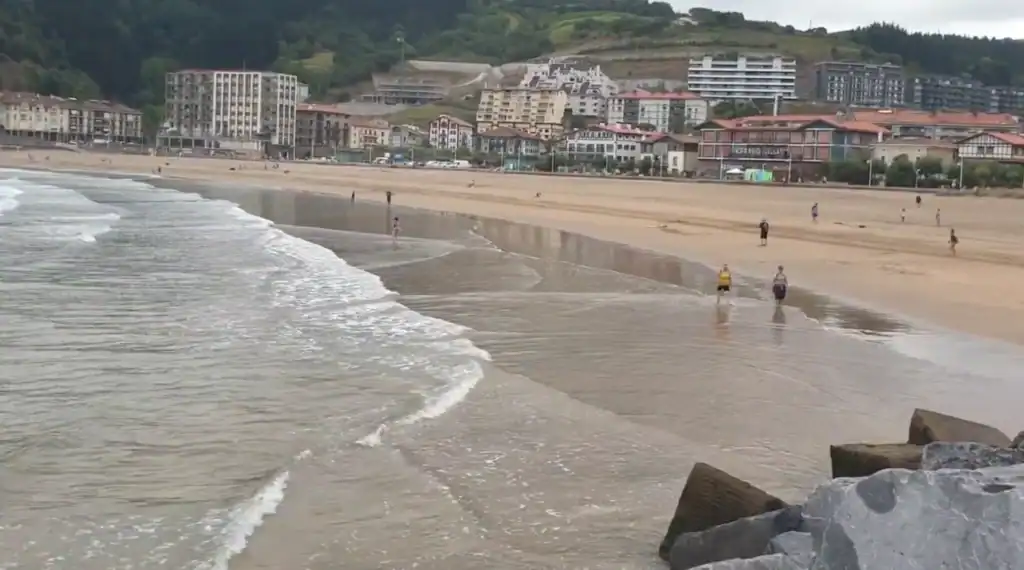
It isn’t bright Mediterranean gold. It’s darker, almost volcanic-looking in certain light, framed by green hills that seem to roll straight into the ocean.
Deba Beach stretches for around 400 meters, although during low tide it blends into neighboring Lapari Beach, creating a surprisingly wide shoreline.
The beach sits exactly where the Deba River reaches the Atlantic Ocean, giving it a constantly changing character depending on the tide.
Early in the morning, fishermen walk along the promenade.
By afternoon, surfers replace them.
By sunset, almost everyone slows down.
I found myself sitting on the seawall longer than I intended, mostly listening to waves instead of doing anything particularly productive.
Sometimes that’s enough.
One of the Gateways to the Basque Coast Geopark
Deba isn’t just another beach town.
It’s considered one of the western gateways to the UNESCO-listed Basque Coast Geopark, famous for its extraordinary Flysch cliffs.
If you’ve never heard of Flysch before, imagine millions of years of Earth’s history stacked into visible layers of rock stretching along the coastline.
It feels less like looking at cliffs and more like reading geology written across the Atlantic.
Even if you aren’t interested in rocks, it’s difficult not to stop and stare.
The landscape has a strange rhythm.
Grey stone.
Green hills.
White waves.
Then repeat.
Surfing in Deba
The Atlantic doesn’t always behave gently here.
That’s exactly why surfers love it.
Experienced surfers come for the famous Sorgin-Zulo wave, which can reach impressive heights when Atlantic swells arrive. It’s not the kind of break beginners should casually paddle into.
On calmer days, though, the coastline becomes much friendlier.
Kayaking is popular around the river mouth, and walking along the promenade is easily one of the simplest pleasures in town.
I don’t surf.
I watched other people do it while drinking coffee.
It felt like the better decision.
Walk to Debako Espigoia
One evening I followed the promenade all the way to the end of the breakwater.
The path is completely flat.
Nothing dramatic happens on the walk itself.
That’s kind of the point.
The Debako Espigoia extends into the Atlantic like a narrow concrete line, separating the river from the open sea.
Standing at the end feels surprisingly exposed.
On one side, the Deba River quietly flows toward the ocean.
On the other, Atlantic waves crash against the rocks below.
If you enjoy photography, this is probably the best viewpoint in town.
Sunset paints everything in soft orange light, while stormy weather transforms the scene into something much wilder, with enormous waves exploding against the breakwater from a safe distance.
I arrived expecting to stay five minutes.
I left nearly an hour later.
A Pintxo Stop at Cafe Restaurante El Astillero
Walking back from the breakwater inevitably leads past Cafe Restaurante El Astillero.
The terrace sits almost directly beside the beach.
It isn’t trying to be trendy.
Locals come for a beer after work.
Families stop after walking the promenade.
Visitors order one more drink before heading back to the train station.
That combination usually tells me everything I need to know.
The menu focuses on Basque classics.
Fresh pintxos, seafood snacks, cold local beer and glasses of Txakoli, the lightly sparkling Basque white wine that somehow tastes even better with sea air.
One interesting detail locals mentioned is that during powerful Atlantic storms and exceptionally high tides, waves can reach the terrace itself.
It’s become something of a local icon for exactly that reason.
Thankfully, the evening I visited was much calmer.
Only the sound of the sea reached my table.
Practical Information
How to Get to Deba
Deba is well connected by Euskotren, making it an easy day trip from both San Sebastián and Bilbao.
The beach is only a short walk from the train station, so you don’t need a car to enjoy most of the town.
Best Time to Visit
Summer offers swimming, surfing and full beach services, including lifeguards, showers and changing facilities.
Spring and early autumn are ideal if you’re more interested in coastal walks and exploring the Flysch coastline without larger crowds.
Winter can be spectacular too, especially if you want to watch Atlantic storms from the breakwater—just keep a safe distance from the waves.
Is Deba Worth Visiting?
If you’re searching for nightlife or luxury resorts, probably not.
If you’re looking for somewhere that feels unmistakably Basque—with dramatic geology, Atlantic surf, quiet beaches and excellent pintxos—Deba quietly delivers all of it.
I came expecting a quick stop between bigger destinations.
Instead, it became one of those places I still think about sometimes.
Mostly because nothing dramatic happened.
And somehow, that’s exactly why I liked it.