The road had no shade on the side where the bus stop was. Just a metal pole with a faded sign, and the asphalt giving off heat I could feel through my shoes.
I’d gone south for the afternoon, down the coast from Vila Nova de Milfontes to a village where the houses are white and the cliffs drop straight into flat water. The plan was simple enough. Bus down, walk, swim, bus back.
The bus down was half empty. An old man slept with his hat over his face. Two girls shared earbuds and laughed at something on a screen. I sat behind the driver and watched the coast open up. Pines first, then dunes, then the Atlantic appearing between buildings like it was trying to catch me off guard.
I got off near a café with plastic chairs outside. Ordered a coffee. The woman behind the counter set a small cup in front of me and said something I didn’t catch. I drank it standing, watching a dog sleep under a parked motorcycle. The dog didn’t move when the owner kicked the engine alive. One eye opened, then closed.
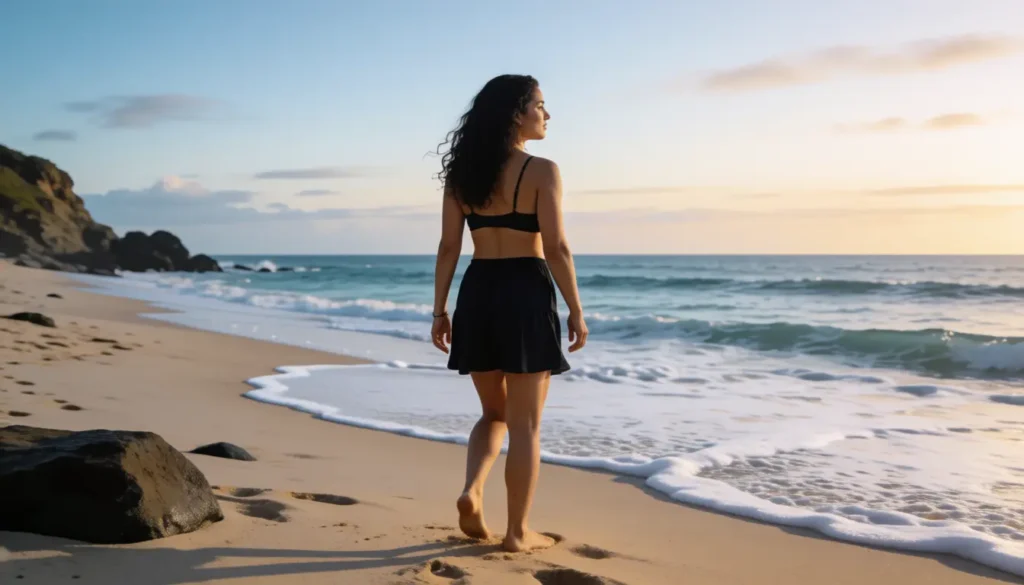
The walk from the village to the beach took maybe twenty minutes along a dirt path through low brush. Plants I couldn’t name, grey-green and brittle, scratched at my ankles. The cliffs were lower than I expected. The sand was dark, almost grey. A couple sat near the water but far apart, not talking. I swam. The water was cold enough that my breathing went shallow for the first minute. Then it was fine.
I lay on my towel and watched a fishing boat move so slowly it could have been still. The cliff cast a shadow that crept across the sand as the afternoon went on. I moved my towel twice to stay in the sun. Nobody else was on my stretch by then. The couple had packed up and gone. I could hear water moving over rocks at the base of the cliff, a soft sound that wasn’t quite waves.
I stayed longer than planned.
I packed up and walked back to the bus stop. The schedule posted on the pole was peeling. I read it three times. The time came and went.
No bus.
I waited another stretch. Then another. A man on a bicycle rode past without looking. The café was pulling down its metal shutter. A boy inside stacked chairs quickly, like he’d done it a thousand times. The light had turned that colour it gets here, not quite gold, more like dry honey on everything.
I had been travelling the Alentejo without a car for weeks, and the buses had been reliable enough. This was the first time one simply didn’t show.
Across the road, a woman pulled a metal shutter down over a kiosk front. She padlocked it and got into a white van. The van went past me once. I noticed it because it slowed, then sped up again. The van came back and went past a second time, slower. Then I saw brake lights. It turned around in the road and pulled up across from where I sat.
The woman inside leaned over and pushed the passenger door open. She didn’t wave. The door just swung out and stayed.
I picked up my backpack and got in.
She pulled away before I’d closed the door properly. The van smelled like sunscreen and bread. There were crates of water bottles in the back. A receipt book sat on the dashboard, pages curled from the heat. I’d seen her earlier at the kiosk, counting change into a tin, her lips moving as she counted.
She drove fast. The radio was on, something with an accordion and a man singing low. My destination didn’t come up. We just headed north. The road was empty. Headlights from the other direction appeared and vanished in pairs. Fields of dry grass flashed past, then a dark stretch of pines. Neither of us spoke. Her hands on the wheel were steady, no hesitation at the bends. Then the river appeared, wide and flat, and I knew we were close.
I said obrigada. She nodded once. I got out near the bridge. The van was already moving when I pulled the door shut.
I keep thinking about the door opening. Not the gesture itself. The absence of language in it. She didn’t ask if I needed help. Didn’t say anything at all. Just the door, and the space on the passenger seat she’d cleared of whatever had been there.
I think there was a towel folded on the seat. Or maybe a rag. I’m not sure now. I never worked out how she knew where I was going. Maybe she didn’t. Maybe she was heading north anyway and the door was just offered, like something that made sense in the moment and needed no explanation.
Getting there
I took the bus south from the stop near the bridge in Vila Nova de Milfontes. The route follows the coast road through several villages. I rang the bell when I saw the café with the plastic chairs. The ride wasn’t long. The return bus was supposed to come at the time posted on the pole, but the schedule was peeling and I may have read it wrong.
When to go
Late July into August is when this coast fills up. I’ve been here since late July and the change is visible day by day. More cars on the road. Different accents in the cafés. People carrying inflatables across the bridge in the morning. But the mornings stay cool, and the southern villages are still quieter than Milfontes. The heat builds by noon. The cliffs have no shade. The water is cold no matter what the air does.
If you’re thinking about it
- Check bus schedules at the tourism office in Milfontes, not just the stop. Printed timetables at stops can be out of date.
- Bring water. The beach paths have no facilities once you leave the village.
- Kiosks near beach access points close early. Don’t count on them for help late in the day.
- Learn the bus routes early if you’re staying a while. The coast road connects several villages but service thins out in the afternoon.
- The cliffs along this stretch have no railings. Stay back from the edges, especially in wind.
I’ll be here a while longer.