It’s 6am in Canggu and the rice paddies across the road are still grey, not green yet — that only happens once the sun actually clears the coconut trees. Someone’s motorbike is already running. I haven’t had coffee.
I came to Bali without a plan, which by now you’d expect. Two weeks, one broken flip-flop, one leather notebook that’s starting to smell like clove cigarettes because everything in Bali eventually does.
Canggu: Local Markets and the General Chaos
Love Anchor is the market everyone mentions first, and I get why — clothes, jewelry, the whole aesthetic. I went once, bought nothing, left. It felt like shopping inside someone’s Instagram feed.
What I kept going back to was Pasar Desa Canggu instead, the actual local market on Jalan Batu Bolong. It opens at 3am for the vendors; I showed up around 7, which locals apparently consider sleeping in. Fish, tempeh, six kinds of chili I couldn’t name, a woman who sold me a comb I didn’t need because she seemed disappointed when I said no to everything else. This isn’t a recommendation. It’s just what happened.
For anything handmade I liked Bali Niki, a smaller art market near Echo Beach — quieter than the Sunday farmer’s market crowd, fewer people filming themselves holding up ceramic bowls.
Where I Stayed in Canggu, and the Things I Did Anyway
I ended up in a small family-run homestay a few streets back from the rice fields: three rooms, laundry drying over the railing, a grandmother who fed everyone regardless of what was on the menu. Nothing about it was designed to be photographed. That’s usually how I know I picked well.
Days went like this:
- Surfing: A surf lesson I didn’t need but took anyway (I fell off more than I stood up).
- Exploring: Long bike rides past temples with no names I could find online.
- Local Food: One evening at a small local warung with plastic chairs where I ate mie goreng standing up because there was nowhere left to sit.
I wasn’t expecting to like Canggu as much as I did. I’d heard it was all coworking spaces and smoothie bowls. Some of it is. Not all of it.
Uluwatu: Eating, Sitting Still, and the Temple Everyone Means to See
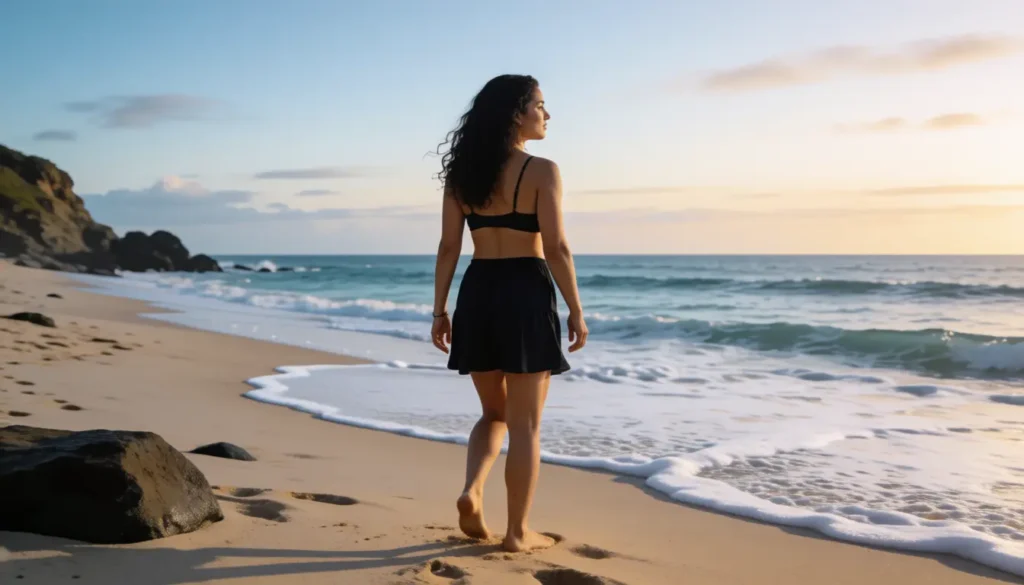
The drive down to the Bukit peninsula takes about an hour, longer with traffic, and the landscape changes fast — flatter, drier, more limestone than jungle. I stayed two nights near Padang Padang.
For food I mostly avoided the clifftop places with the infinity views and the $9 smoothie bowls, not because there’s anything wrong with them, just — I wanted plastic tables and someone’s grandmother’s recipe again. Loca Warung did that. Family-run, no website I could find, chicken so good I didn’t ask what was in the marinade.
I got a massage at a small local spa near Uluwatu, one of the no-frills ones with three treatment rooms and a fan instead of air conditioning. Coconut oil, questionable pop music playing quietly from someone’s phone, and I fell asleep halfway through, which I think is the actual measure of whether a massage worked.
Uluwatu Temple I almost skipped — cliff-edge temples can feel like a checklist item after a while — but I stayed for the Kecak fire dance at sunset anyway. Dozens of men chanting in a circle, no instruments, just voices, while the sky went orange behind them. I didn’t take a photo. I don’t know why. Some things felt like they’d shrink if I tried.
Quick Bali Travel Tips (Canggu & Uluwatu)
Practical Details if You’re Planning a Trip:
- Getting Around: Canggu to Uluwatu is about 45 minutes to 1 hour by scooter or car depending on traffic (in Bali, always add 30 extra minutes).
- Best Time for Markets: Pasar Desa Canggu is best visited before 10am for fresh produce.
- Uluwatu Kecak Dance: Runs daily around sunset at Uluwatu Temple. Arrive early to secure a seat with a direct view of the stage.
- Budgeting: Homestays in Canggu run significantly cheaper than tourist villas. Local warungs in Uluwatu cost a fraction of clifftop cafés with even better local food.
I stayed longer than planned. I usually do.
More soon. Or not — we’ll see.