The dog went first.
It stepped onto the plank at the front of the boat and sat down like it had done this a hundred times, which maybe it had. A woman with a bag of bread she kept shut on her lap got on after the dog, and then the rest of us. I had been in Vila Nova de Milfontes for nearly three weeks, and every evening I had stood on the near bank of the Mira, looking at the far shore. I kept meaning to cross over. Then the light would soften and I would walk back to my room and write something in my notebook and sleep. This morning I woke before my alarm and walked down to the dock first thing.
The crossing took less time than waiting for it did. We stood at the dock for a while as the boatman filled the tank from a jerry can and talked to someone on the quay about a missing torch. Then we were on the water and it was brief, and the other bank came up fast. The dog didn’t look at the river once. The woman opened her bread bag and tore off a piece and ate it standing up, holding the side of the boat with her free hand. The boatman didn’t speak to any of us during the crossing, just steered and looked straight ahead at the far bank, and I watched the water part at the bow.
Sand under my shoes.
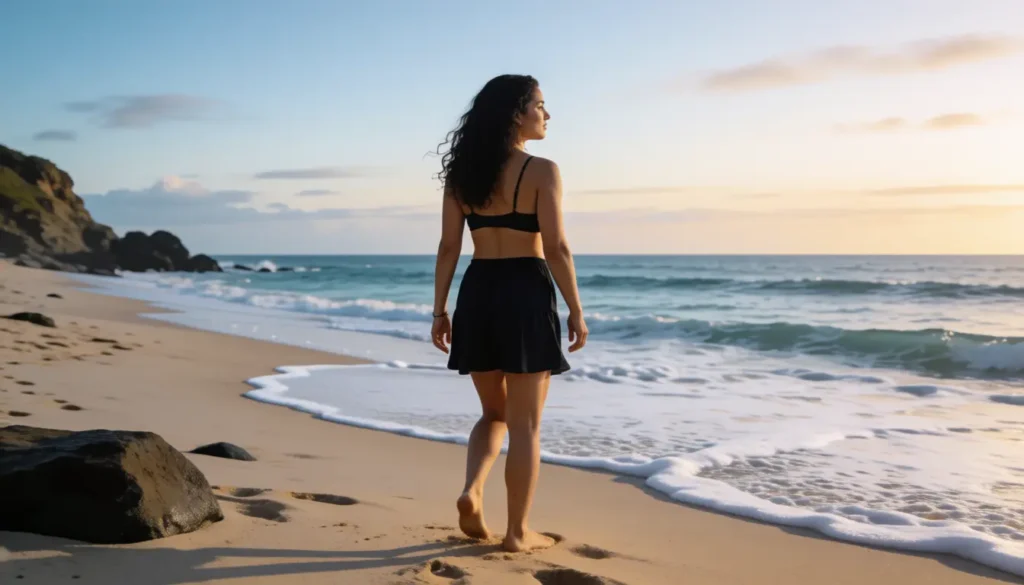
Praia das Furnas is a large beach backed by dunes, and I had walked a long while from the landing point before sitting on the dark sand where nobody had put up an umbrella. The water was colder than I expected, and I went in to my waist and came back out and sat on my towel with my knees pulled up to my chest, watching the town across the river. The beach faces back toward Vila Nova de Milfontes, which I hadn’t understood until I was sitting there with my back against a dune, looking at the place I’d been sleeping in for weeks. I could see the white buildings climbing the hill, the church tower, the road I walk every morning to buy bread, and the fishing boats tied up along the riverfront where the water was very still. A man with a metal detector had been sweeping near the dunes earlier, but he was gone by early afternoon, and a family had set up near the water, and their children kept running from the waves. It was strange, sitting on a beach and looking at the place where I sleep, where my bag is, where the notebook sits on the bedside table, like seeing a room from a hallway through a door someone left open.
Getting there
I came down from Lisbon on a morning bus. The route went through villages I didn’t catch the names of, and the road wound along the coast for the final stretch, and I could see the Atlantic between the trees. I had booked a room for a short stay, starting late July, and I’m still here. The bus was mostly empty and I sat near the back and watched the landscape go brown and dry the further south we went. A woman across the aisle was eating almonds from a paper bag and offered me some without speaking, and I took a few. The driver stopped at a petrol station and came back with cans of juice for himself and the woman in the front seat.
When to go
Late August on the Alentejo coast is hot but not punishing. The mornings are still cool enough for a long-sleeved shirt, and by late morning the heat settles in and stays until evening. The town has been getting busier each week, with Portuguese families on holiday filling the restaurants by the river and the main beach by midday. The crowds here have a rhythm, thinning out after lunch when people go inside and the streets go quiet for a while. By evening the town fills again, and I have learned to do my walking early or late. The afternoons I give over to sitting still and not moving much.
I kept thinking about how the town I’ve been living in for weeks looked like something from a brochure, sitting across the water with its white walls and church tower and the fishing boats at the dock. I see those same buildings every morning when I walk down for bread, and they are ordinary and unremarkable, but from the beach they looked like a place I had never been and was only passing through. I don’t know what to make of seeing my own street from this distance, or if it means anything at all. I sat on the sand until the boatman waved from the returning boat, and I’m not sure I was ready to go back.
If you’re thinking about it
- The boat across the Mira runs in summer only, and the dock is at the river mouth near the town centre.
- Bring water and something to sit on, as there are no facilities on the beach at Praia das Furnas.
- Go early for shade, as the dunes offer some cover but the sand gets hot by midday.
- The crossing is short but the wait can be long, so don’t plan anything time-sensitive for right after.
- Stay on the town side if you want restaurants and shops within walking distance, as the far side has nothing but dunes and sand.
- Wear shoes you don’t mind getting wet, since you step off the boat into shallow water.
I’ll be here a while longer.